
Reviewed · WORKSHOPS
Group Kiteboarding Lesson in Tulum
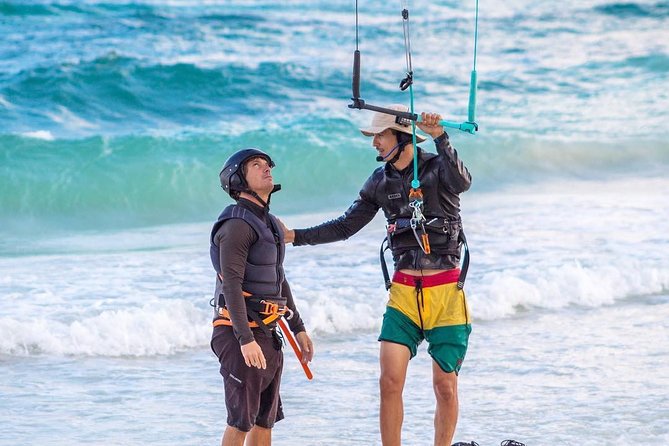
Learning the basics of kitesurfing in Tulum is all about timing and control. This lesson is a small group format with IKO–certified instructors, so you get hands-on guidance fast, from wind theory to your first waterstarts.
I especially like how the training moves in a clear order: kite & wind theory on the beach, then self-rescue and control drills, then real attempts at getting up and riding. The main thing to think about is that kiteboarding depends on wind, so your session may shift toward the best conditions to keep it productive.
In This Review
- Key takeaways before you kite in Tulum
- Why Tulum works for a first-time kitesurfing lesson
- Where your Tulum lesson starts: Ahau Tulum beach area
- Small-group coaching: 2 customers, 1 instructor
- Beach skills: wind window, safety systems, and self-rescue
- Kite & wind theory
- Setting up the kite & lines
- Inner workings of the bar and safety systems
- Self-rescue technique
- Kite control
- In the water: body drag, power strokes, and waterstart basics
- Body drag upwind
- Power strokes
- Waterstart with assistance
- Waterstart solo
- Ride downwind and ride upwind
- Transitions
- What you can realistically learn in 3 hours
- Value check: is $150 worth it for beginners?
- Wind, timing, and the El Cuyo possibility
- Included gear and comfort: showers, Wi-fi, and bathroom access
- Who should book this lesson in Tulum (and who should skip it)
- Tips for making your 3 hours count
- Should you book this kiteboarding lesson in Tulum?
- FAQ
- How long is the kiteboarding lesson in Tulum?
- Is this lesson private or group?
- What language is the instruction offered in?
- What’s included in the price?
- Where do we meet for the lesson?
- What is the minimum age?
- Is it safe for people with back problems?
- What happens if weather is poor?
- Can I cancel and still get a refund?
Key takeaways before you kite in Tulum
- Small group coaching: 2 customers with 1 instructor keeps the pace tight and feedback personal.
- Beach-to-water progression: you learn safety and control first, then practice body drag, waterstarts, and riding drills.
- IKO-certified instruction: the course is built around tested coaching methods and safety systems.
- Real wind planning: if conditions aren’t perfect, you may be guided toward better spots or times (often nearby).
- Included beach amenities: bathrooms, showers, and Wi-fi are available at the meeting area.
- 3 hours goes quick: expect a lot of learning, but also realize you won’t master everything in one go.
Worth a look before you lock in this Playa del Carmen day:
- Private Kiteboarding Lesson in Tulum★ 5.0 · 90 reviews
- Tulum: Mexican Cooking Class in Local Home★ 4.9 · 34 reviews
- Mexican Cooking class experience in Tulum★ 5.0 · 12 reviews
- Salsa Class,Mezcalita Workshop & Mexican Dinner★ 5.0 · 9 reviews
Why Tulum works for a first-time kitesurfing lesson
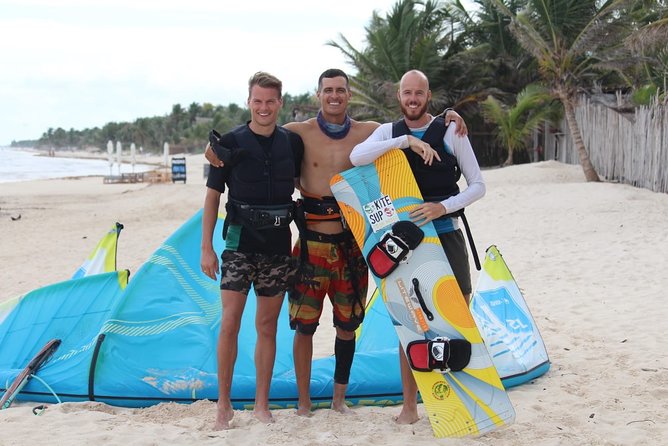
Tulum is the kind of place where you can feel how much the sport is about reading nature. Your success doesn’t come from brute effort—it comes from understanding wind and managing the kite at the right moment. That’s why this format starts with theory on the sand before you ever touch the board.
The upside for you is simple: you’re not thrown into chaos. You learn the idea of the wind window and how to set up the kite and lines so your body can react without guessing. And because the coaching is structured, you spend the 3 hours practicing the skills that actually build momentum for later lessons.
The other reason I like Tulum for this is that it’s easy to picture what you’re learning. You’re training near the beach, so you can watch how the kite moves, understand what the safety gear is doing, then apply it almost immediately.
Where your Tulum lesson starts: Ahau Tulum beach area
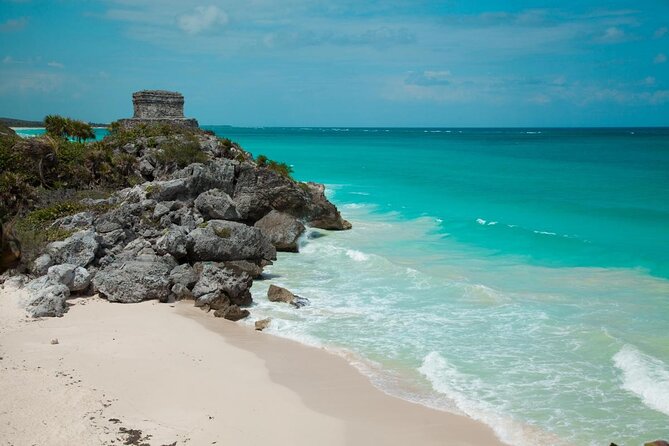
You’ll meet at the beach area connected with Ahau Tulum, at Carr. Tulum a Boca Paila Km. 7.5, Zona Costera, Tulum Beach. The activity ends back at the same meeting point, so you’re not stuck figuring out transport after you’re tired and salty.
This matters because your energy is the whole game in a 3-hour lesson. A start-and-finish at the same place keeps your day from turning into a logistics puzzle, and it gives you a stable spot to return to for bathrooms, showers, and a quick reset.
Also, the package includes bathrooms, showers, and Wi-fi at the meeting area. That’s a practical win when you’re getting used to gear handling and then getting wet.
Small-group coaching: 2 customers, 1 instructor
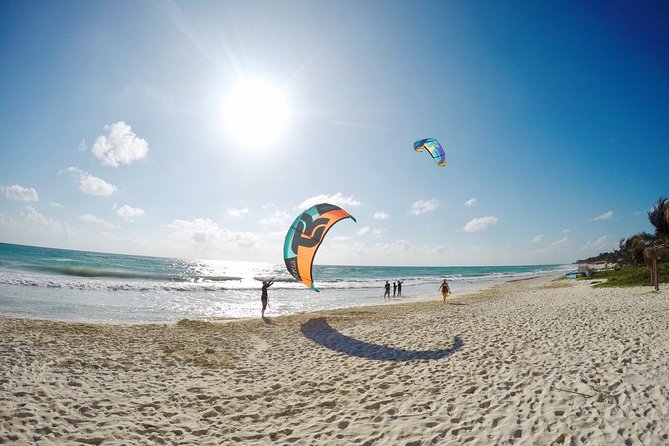
This is listed as a group lesson (2 customers + 1 instructor). That’s not a downside for beginners. In fact, it’s often better than a big group because the instructor can correct your kite control and body positioning in real time.
You’ll see this kind of teaching style reflected in the coaching names people mention: Mauricio and Antonio get praised for being fun and competent, and Beau is noted for positive, encouraging energy. Pavel, Amaus, and Audrey also show up in the team vibe, which tells me this is not a solo instructor situation. You’re likely working within a coordinated coaching group.
What you should expect from this size:
- More chances to ask questions while you’re still mentally processing the previous step.
- Better monitoring during safety drills like self-rescue.
- Faster “try again” cycles when kite control doesn’t look right yet.
If you’re a complete beginner, that’s gold. If you already have a little experience, you might still benefit from a private setup for speed, but the small group here is designed to avoid the usual learning bottlenecks.
Beach skills: wind window, safety systems, and self-rescue
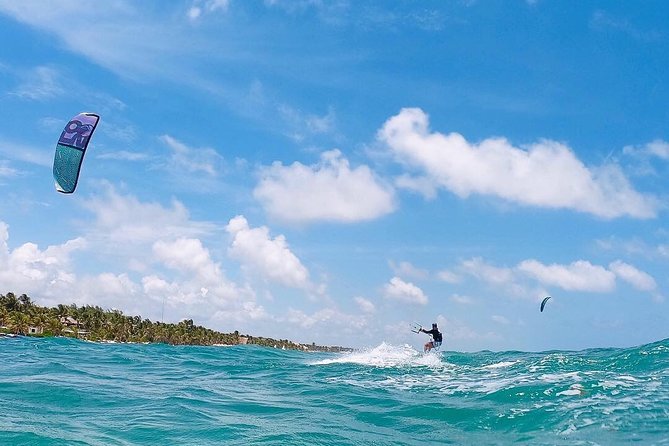
Your lesson begins on the beach with the stuff that keeps kiteboarding from becoming a guessing game. Here’s what the training sequence targets, in plain terms.



Kite & wind theory
You’ll learn core concepts like the wind window, which is basically the operating area of the kite in relation to wind direction. Once you understand that, you stop treating the kite like a mysterious force and start treating it like a tool you can position.
Setting up the kite & lines
This is where beginners often lose time. If you don’t know how the kite and lines go together, you’re always worried you’ll do something wrong. Learning setup early means you spend less mental energy on “gear anxiety” and more on the actual sport.
Inner workings of the bar and safety systems
This is not glamorous training, but it’s essential. You’ll understand the bar controls and how the safety system is meant to protect you when things go sideways. Even if you never need it, knowing what it does makes you calmer in the water.
Self-rescue technique
This is the skill you hope you’ll never have to use. But you should still learn it. The lesson includes self-rescue technique so you know what to do if you get in trouble and need a methodical way to get back under control.
Kite control
By the end of the beach portion, you’re working toward controlled kite movement rather than wild power. Kite control is what lets you time your next step: body drag, waterstarts, and then actual riding.
In the water: body drag, power strokes, and waterstart basics
Once you’re in the water, the lesson shifts into movement. The goal isn’t to show off. It’s to teach you how to create traction and how to coordinate yourself with the kite.
Body drag upwind
This is one of those drills that makes sense once you see what it’s trying to fix. Upwind body drag teaches you how to manage yourself so the kite can power you in the direction you need. It’s also the first step toward feeling how power affects your balance.
Power strokes
Power strokes are about timing. Instead of yanking and hoping, you learn how to apply effort in a way that matches kite tension. This is where many beginners start realizing kiteboarding is a rhythm sport.
Waterstart with assistance
This is the bridge between “floating and being dragged” and “actually getting up.” With assistance, you’ll attempt the early version of a waterstart while the instructor helps you avoid common mistakes that can lead to bad habits.
Waterstart solo
Then you try it on your own. That moment matters because your confidence changes when you realize you can repeat the action—not just get lucky during assistance.
Ride downwind and ride upwind
Once the basics click, you start riding. Downwind riding helps you understand speed and kite position without fighting as many angles. Upwind riding is harder and forces you to refine control and body alignment so you stop feeling like you’re always drifting.
Transitions
Transitions are what turn a few straight rides into actual progression. You’ll practice shifting how you move and position so you can keep the kite in the right area while your body angle changes.
What you can realistically learn in 3 hours
Three hours sounds short, because it is short—especially for complete beginners. But it’s also enough time to learn the sequence that leads to progress.
From past experiences, beginners have made real strides quickly when wind cooperates and when coaching is patient. One lesson experience focused on learning upwind basics after multiple short sessions across a week, and the instruction was described as encouraging and motivating. Another highlighted how wind timing can limit how many lessons you can fit in a trip, which is a reminder to start earlier in your vacation if you can.
Here’s the balanced expectation I’d set for you:
- You’ll get a strong foundation in safety, setup, kite control, and core water drills.
- You might get several rides, but mastering both upwind control and smooth transitions usually takes more time than one session.
- Your instructor will keep adjusting based on conditions, which is exactly what you want in a wind-dependent sport.
Also, even when conditions are tricky, smart instruction still matters. One coaching approach mentioned switching to more reliable learning conditions farther north (El Cuyo) to keep training moving.
Value check: is $150 worth it for beginners?
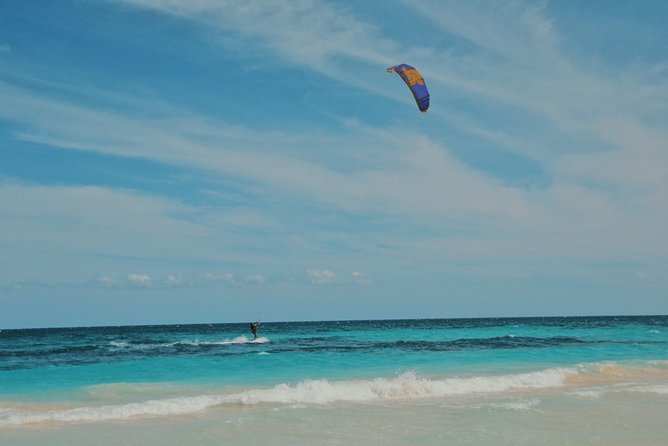
At $150 per person for about 3 hours, you’re paying for more than just time in the water. You’re paying for:
- IKO-certified coaching structure
- hands-on kite control training
- gear handling and safety systems instruction
- a lesson plan that goes from beach skills to water riding attempts
For me, the value comes from the “conversion” from theory to practice. You don’t just learn about wind; you use it. You don’t just hear about safety; you learn self-rescue technique. That’s hard to replicate on your own.
One more value point: the lesson is designed for a small group (2 customers), so you’re not just being processed. You’re being watched and corrected.
If you know you’ll want multiple sessions, pricing can be even better because that foundation helps each next lesson stick faster. And if you’re ultra efficient and just want maximum time riding, you might consider private instruction—but for most people, the small-group setup here is a solid sweet spot.
Wind, timing, and the El Cuyo possibility
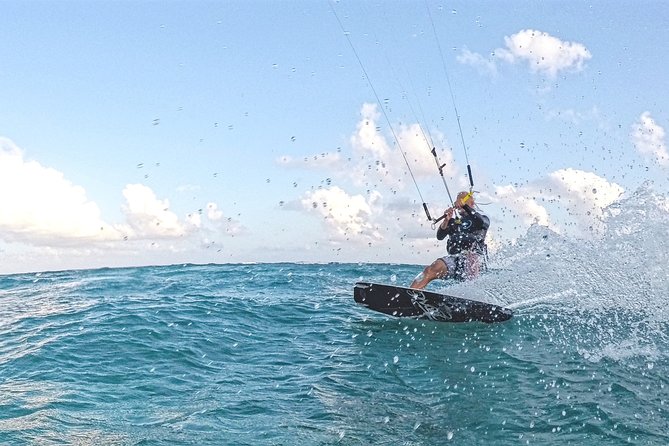
Kitesurfing lives and dies by wind. The good news is that experienced coaches plan around that reality. Past students have described the instructor messaging to shift lesson timing toward optimal conditions. That’s a huge difference between a lesson that happens and a lesson that teaches.
Another detail worth knowing: there’s mention of taking learners to El Cuyo for better wind conditions, described as about two hours’ driving distance. That tells you the team doesn’t treat wind problems as a dead end. They look for a better learning setup so your day still has momentum.
What this means for you:
- If the wind is off in Tulum at first, expect adjustments.
- Flexibility is part of the “real experience.” If you schedule tight activities back-to-back, you may feel the squeeze.
And when weather truly won’t cooperate, the experience requires good weather and can be canceled due to poor conditions—with a new date offered or a full refund.
Included gear and comfort: showers, Wi-fi, and bathroom access
You get kiteboarding gear and an IKO certified instructor. You also get use of bathrooms, showers, and Wi-fi at the meeting area.
That comfort piece matters more than people think. Kiteboarding training mixes focus with physical effort. When you can shower off and reset quickly, you’re more likely to stay calm and learn efficiently instead of dragging yourself through the rest of the day.
There’s also use of paddleboarding included. The exact timing isn’t spelled out in the lesson steps, but having paddleboarding gear available can be a practical option if conditions or pacing create downtime.
Who should book this lesson in Tulum (and who should skip it)
This lesson has clear suitability notes:
- Minimum age is 10 years
- You should have a moderate physical fitness level
- Not recommended if you have back problems or serious medical conditions
- Service animals are allowed
- Instruction is in English
Who this fits best:
- True beginners who want a structured path from theory to first riding attempts
- People who learn well with short drills and real-time correction
- Visitors who want a full workout without committing to a multi-day training camp
Who should reconsider:
- If your back issues flare with physical strain, this isn’t the place to test that risk
- If you hate instruction and correction, you might feel frustrated during kite control and safety steps
If you’re unsure, it’s worth thinking honestly about your comfort with water work and physical coordination.
Tips for making your 3 hours count
You’ll learn faster if you treat the lesson like training, not like a random ride. Here are the practical moves that line up with how the coaching is described.
- Arrive ready to focus. This is a 3-hour sequence that starts with theory and quickly transitions into water drills.
- Listen carefully during the safety part. The bar and safety system pieces are what keep you calm and capable later.
- Stay sunscreen-forward. One piece of advice that comes up in feedback is to wear lots of sunscreen.
- Plan your trip with wind in mind. People have noted lessons can shift due to wind timing, so giving yourself breathing room helps.
And remember: transportation and food and drinks are not included, so factor that into your schedule. Build in time before and after the lesson so you’re not rushing when you’re wet, cold-ish, or tired.
Should you book this kiteboarding lesson in Tulum?
Yes—if you want a structured introduction with IKO-certified coaching and you’re okay with a wind-dependent sport. The small group size (2 customers + 1 instructor) makes a big difference when you’re learning kite control and safety, and the step-by-step progression from beach theory to waterstarts and riding attempts is exactly the kind of training beginners need.
Book it sooner than later if you can. It’s commonly reserved about 23 days in advance, and a 3-hour window is easier to schedule when you lock in dates early.
I’d skip it or ask more questions first if you have back problems or serious medical conditions, or if you’re expecting guaranteed long rides no matter the weather. The best learning happens when you match your schedule to the wind—and this team is set up to adjust when conditions allow it.
FAQ
How long is the kiteboarding lesson in Tulum?
The session is about 3 hours (approx.).
Is this lesson private or group?
It’s a group lesson with 2 customers and 1 instructor.
What language is the instruction offered in?
Instruction is offered in English.
What’s included in the price?
The price includes an IKO certified instructor, kiteboarding gear, and use of bathrooms, showers, and Wi-fi. Use of paddleboarding is also included. Transportation and food and drinks are not included.
Where do we meet for the lesson?
You meet at Ahau Tulum, Carr. Tulum a Boca Paila Km. 7.5, Zona Costera, Tulum Beach, 77760 Tulum, Q.R., Mexico, and the activity ends back at this meeting point.
What is the minimum age?
The minimum age is 10 years.
Is it safe for people with back problems?
It is not recommended for participants with back problems or serious medical conditions.
What happens if weather is poor?
The experience requires good weather. If it’s canceled due to poor weather, you’ll be offered a different date or a full refund.
Can I cancel and still get a refund?
You can cancel up to 24 hours in advance for a full refund. If you cancel less than 24 hours before the start time, the amount paid will not be refunded.
More Workshops in Tulum
- Private Kiteboarding Lesson in Tulum
★ 5.0 · 90 reviews - Tulum: Mexican Cooking Class in Local Home
★ 4.9 · 34 reviews - Basic Surf Lessons in Tulum
★ 5.0 · 21 reviews - Mexican Cooking class experience in Tulum
★ 5.0 · 12 reviews - Salsa Class,Mezcalita Workshop & Mexican Dinner
★ 5.0 · 9 reviews - Private Mayan Food Cooking Class, Cenote and Coba Ruins
★ 5.0 · 7 reviews
More Tour Reviews in Tulum
- Chichen Itza, Cenote and Valladolid Small Group Day Trip
★ 5.0 · 2,104 reviews - Tulum Guided Tour, Magical Cenote, Lagoon Snorkeling and Beachside Lunch
★ 5.0 · 1,888 reviews - Tulum Ruins, Turtles in Akumal and Cenote tour
★ 5.0 · 1,706 reviews - Sian Ka’an Adventure Full Day Trip to Punta Allen
★ 5.0 · 1,179 reviews - Selva Maya Eco Adventure Park: Ziplining, Hanging Bridges, Rappelling and Cenote
★ 5.0 · 1,057 reviews - Tulum Archaeological Site & Sian Ka’an Muyil Tour from Tulum
★ 5.0 · 824 reviews
Just Added: Fresh Playa del Carmen Reviews




Workshops, compared.
 ★ 5.0Playa del Carmen Mexican Cooking ClassFrom $113306 reviews
 ★ 5.0Mexican Cooking Class 1 or 3 Courses Tequila and Mezcal TastingFrom $105151 reviews
 ★ 5.0Private Kiteboarding Lesson in TulumFrom $27090 reviews
 ★ 5.0Authentic Mexican Cooking Class in Playa del CarmenFrom $12034 reviews
 ★ 4.9Tulum: Mexican Cooking Class in Local HomeFrom $9934 reviews
Gourmet Experience: 5 Course Dinner, Cocktail Class and Wine PairingFrom $15928 reviews
 ★ 4.53-Hour Drinks and Appetizers Class in Playa del CarmenFrom $4927 reviews
 ★ 5.0Surfing Lessons – Learn To Surf In Playa del CarmenFrom $7526 reviews
Browse the lists this tour appears in