
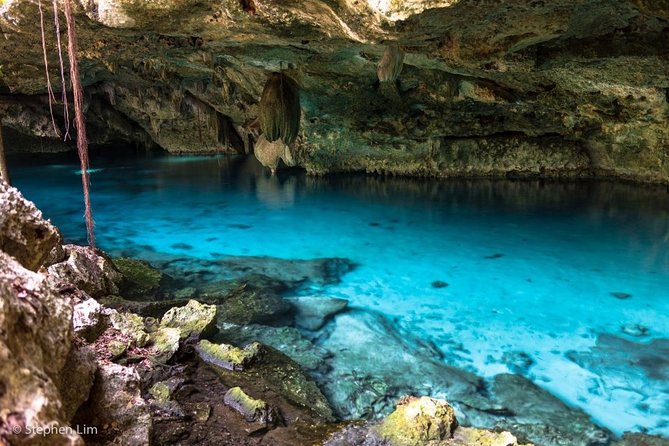
Reviewed · CENOTE DIVING & CAVERN DIVES
Discovery Scuba Diving
Cenote scuba, no long commitment. This is a smart way to test out PADI Discover Scuba in Tulum when you’re short on time, with extra-steady instruction from people like Julieta, Miri, Jonas, and Jess. I also like that you avoid the usual nickel-and-dime feeling: lunch, snacks, water, and rental gear are included, so your day stays simple.
The main downside to know up front: this program is built for new scuba students, so if you’ve already scuba’d before, you may find it a bit slow and too basic.
In This Review
- Key things I’d bet on (before you book)
- A 5-hour introduction to scuba in Tulum’s cenotes
- Infinity 2 Diving and the small-group feel
- Classroom theory that actually prepares you
- Pool practice: skills, breathing, and confidence
- Your first open-water descent around Casa Cenote
- Gear, lunch, snacks, and why this matters for value
- Safety checks and who should plan carefully
- How the staff handles nerves and surprises
- Who this experience fits best in your Tulum plan
- Price and logistics: the practical checklist
- Should you book Discover Scuba in Tulum?
- FAQ
- What is PADI Discover Scuba?
- How long is the experience in Tulum?
- Is hotel pickup included?
- What’s included in the price?
- Do I need to be certified?
- Where does the cenote session take place?
- What skills do I practice before going into the cenote?
- Are there medical or fitness requirements?
- What language is the instruction in, and is it private?
- What happens if weather is bad?
Key things I’d bet on (before you book)
- Private, small-group attention: it’s only your group, and instructors stick close while you get comfortable.
- A clear progression: classroom theory, then pool skills, then your first open-water descent.
- Cenote choice is safety-driven: you’ll focus on Casa Cenote, and only certain nearby sites are used for the right conditions and depth.
- Included comfort food: lunch plus snacks and water, so you’re not scrambling mid-day.
- Safety checks are real: you’ll complete a health questionnaire, and you need moderate physical fitness.
Down into the caverns, other dives near Playa
- 2 dives in Cenote Dos ojos Certified Divers★ 5.0 · 227 reviews
- Floating breakfast in The Yellow Nest (near Dos Ojos cenote)★ 4.5 · 188 reviews
- 2 cenote divings (including one deep diving) for advanced divers in Tulum★ 5.0 · 186 reviews
- 3 Cenote Dives – Casa & Dos Ojos★ 5.0 · 118 reviews
A 5-hour introduction to scuba in Tulum’s cenotes
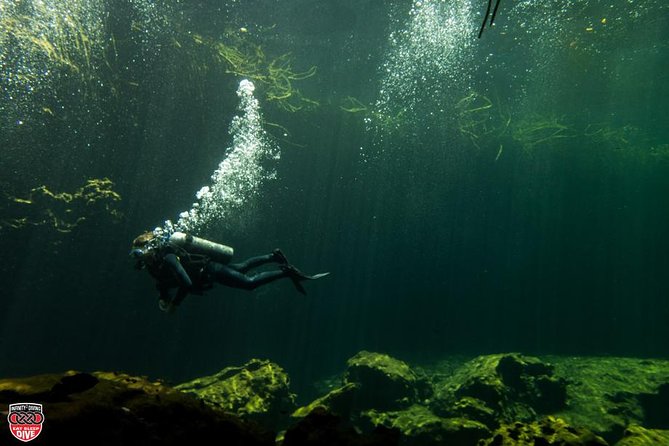
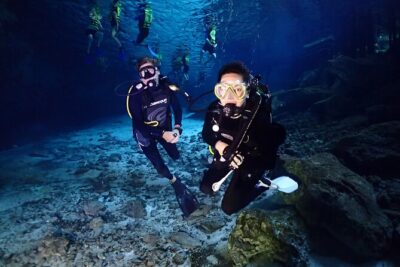
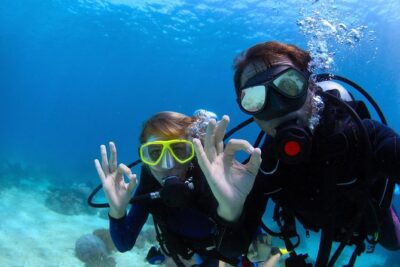
If you’ve been watching cenote videos and thinking, That looks unreal, this is the practical version. You’ll learn the basics of scuba equipment and breathing, get comfortable with the skills in a pool, then go underwater in a cenote setting around Casa Cenote.
The time frame is the big selling point. At about 5 hours, this fits nicely between beach time, ruins, and the rest of your Tulum plans. It’s also a good option if you’re curious about scuba but don’t want to jump straight into a full certification course.
And because it’s PADI Discover Scuba, it’s designed as an introduction, not a certification. You’re there to see if scuba clicks for you—how it feels, how your body responds, and whether you’re excited to keep going afterward.
Infinity 2 Diving and the small-group feel
This experience runs through Infinity 2 Diving, and you meet at Palenque 22, La Veleta (Tulum). Transport from the dive shop to the water area and back is included, but hotel pickup and drop-off are not—so plan on getting yourself to the meeting point.
What matters most here is how the day is handled once you’re in the water. Instructors are consistently described as patient and supportive, and they don’t rush you into doing anything you’re not ready for. Names that come up include Alejandro, Mariana, Julia, and Maya, plus multiple team members like Miri, Jonas, Mia, and Nickolia—all known for keeping first-timers calm.
That “stay close and help you adjust” approach is what makes this kind of trial feel doable. If you’re anxious about equipment, buoyancy, or simply getting your face gear on, you’ll want that human factor. This tour leans hard into it.
Classroom theory that actually prepares you
Before you touch any gear, you’ll get some basic theory in a classroom setting. The point isn’t to drown you in terms—it’s to help you understand what the equipment does and how the process works once you’re on the water.
You’ll learn the scuba basics and the diving rules you need for safe participation. Think of it as the part where your brain stops saying, Wait, how does this even work? and starts saying, Okay, I get the plan.
For first-time scuba students, that matters more than people expect. When you know what you’re doing next, your body tends to cooperate. And when your body cooperates, the cenote looks way better.
Pool practice: skills, breathing, and confidence
Next comes confined water practice in a swimming pool. This is where you’ll practice the core skills in a controlled setting, before you head into the cenote itself.
This step is valuable for one simple reason: it reduces the number of unknowns. In open water, you’re dealing with buoyancy, breathing rhythm, and learning how to move underwater. In the pool, you focus on learning the mechanics without the added pressure of a larger space.
If you’re even a little nervous, the pool part is also where you can get your timing right. You can take a breath, try the skill again, and build a mental checklist for what comes next. And since this is a trial experience, instructors usually guide you patiently rather than treating you like you should already know everything.
More dives off the Riviera Maya
Your first open-water descent around Casa Cenote
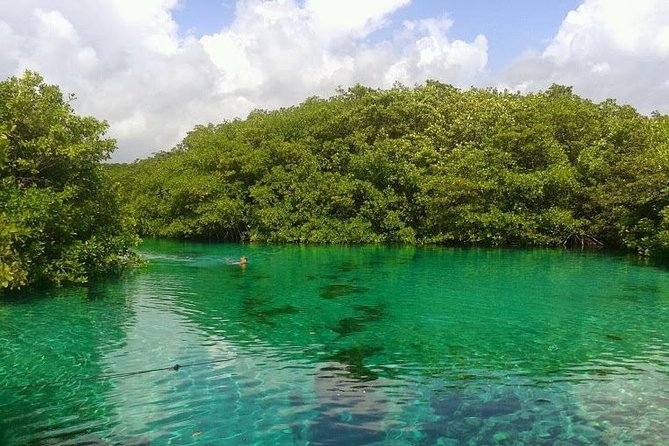
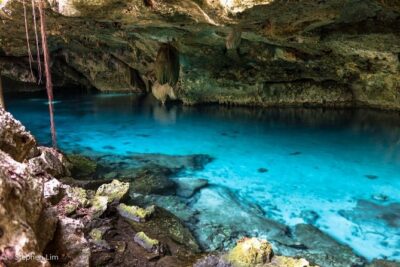
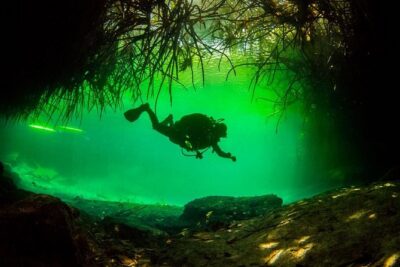
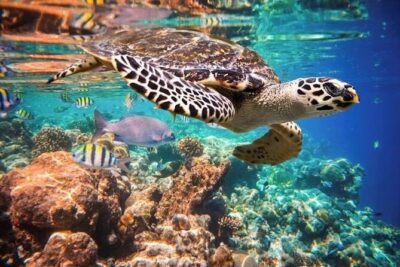
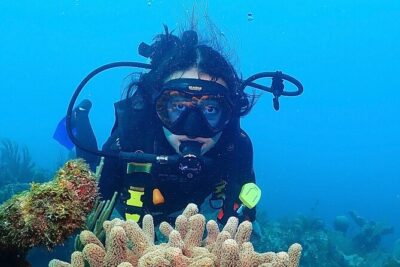
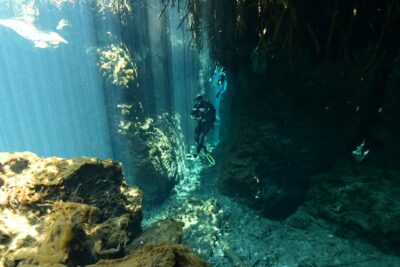
After pool skills, you’ll head to the cenote for your first open-water session (often described as open-water step 1). The highlight is the chance to see life and texture underwater beneath the cenote’s surface—one of the most memorable ways to experience Tulum beyond the beach.
Casa Cenote is the key name tied to this itinerary. That’s partly because it’s a great place for beginners, and partly because safety and training depth matter for an introduction course.
Here’s a detail worth noting: for safety and depth reasons around this area, the operator limits the dive sites you can use to Casa Cenote and Yax Chen. So if you’re picturing a wide-ranging “choose-your-adventure” underwater tour, this isn’t that. It’s a focused experience that prioritizes the right conditions for first-timers.
If you’re wondering what the underwater experience feels like: expect a controlled, guided progression with instructors staying near you and checking in before you go lower or move on to the next step. That’s the part that makes people say the experience feels supportive rather than stressful.
Gear, lunch, snacks, and why this matters for value
One of the most practical perks is that rental equipment is included, along with lunch, snacks, and water. That sounds like standard tour stuff, but it’s a real quality-of-day advantage.
When you’re trying scuba for the first time, you want your energy focused on learning—not tracking down gear, guessing what’s included, or paying extra for basics you assumed were covered. By including the equipment, the day stays predictable.
And the included food is a big deal because cenote sessions can work up an appetite quickly, especially if you’ve been moving around Tulum that morning. You’ll have lunch and snacks waiting, so you’re not stuck making do with whatever’s closest.
If you’re traveling with someone, this is also helpful. You can both stay on the same schedule, and you don’t end up with one person waiting while the other scrambles for lunch, towels, or rental add-ons.
Safety checks and who should plan carefully
This is an activity where safety rules aren’t just fine print—they’re part of the flow. You’ll be required to complete a health questionnaire before diving, and some pre-existing medical conditions may prevent you from participating (examples given include asthma and heart conditions).
You also shouldn’t plan scuba so close to flying. Diving within 18 hours of flying is not recommended, which is a classic rule meant to reduce risk related to pressure changes.
Fitness matters too. You should have a moderate physical fitness level, which makes sense for equipment handling, moving in and out of the water, and staying comfortable through the skills practice.
If you have any concerns, the best approach is straightforward: talk to your doctor before you go. This isn’t a gamble-style activity. It’s a guided introduction, and your body needs to be ready for it.
How the staff handles nerves and surprises
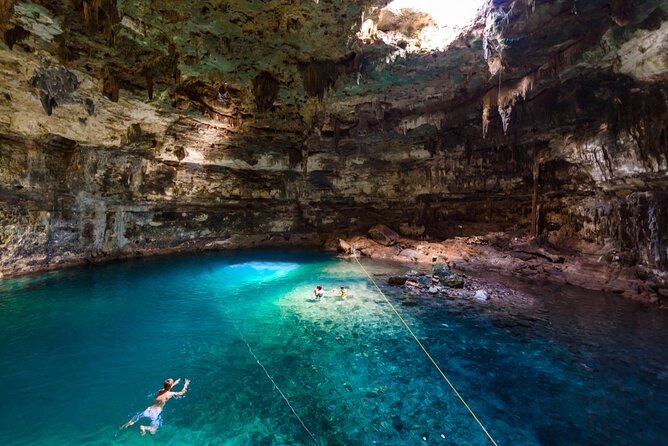
A big reason this experience earns top marks is how instructors respond when someone feels uneasy. In several accounts, instructors paused, stayed behind to make sure the student was comfortable, and helped them build confidence before continuing.
That support showed up in real moments, too. One story described a situation involving an unusual wreck-related problem that affected the timing underwater. Instead of treating it like a lost cause, the instructors adapted the plan and handled the downtime with a positive attitude—getting the group to a restaurant for a meal, drinks included, so the day didn’t fall apart emotionally.
That’s the kind of professionalism you can’t fake. When your day includes equipment, weight adjustments, and unfamiliar buoyancy, the ability to stay calm makes a huge difference.
Who this experience fits best in your Tulum plan
This is ideal if you:
- want to try scuba without committing to full certification right now
- have limited time and want a structured, guided introduction
- prefer close instructor attention and a slower pace while you learn
- love cenotes and want to see them from underwater, not just from the platform
It may be less ideal if you:
- already have real scuba experience and want more advanced scenarios
- want something closer to a long, varied underwater tour instead of a beginner-focused progression
- expect a site-hopping itinerary beyond the basic cenote options used for safety
One helpful way to decide is to ask yourself this: are you currently in “learning mode” or “adventure-chasing mode”? This program is built for learning mode—and that’s why it works so well for first-timers.
Price and logistics: the practical checklist
No prices are provided here, so I can’t compare cost numerically. But I can tell you what affects value for this kind of experience.
You’re getting several things included: rental gear, lunch, snacks, water, and transport between the dive shop and the activity. Those add-ons can easily turn an affordable-looking outing into something pricier once you factor everything in. Here, the included list helps keep your total day cost more predictable.
Logistics are also mostly straightforward:
- start point: Palenque 22, La Veleta, Tulum
- end: back at the same meeting point
- language: English
- style: private/activity for only your group
- hotel pickup: not included, so plan transportation to the meeting spot
If you’re staying somewhere outside easy reach of La Veleta, this is the one part you’ll want to plan early. Arrive on time, and the day runs smoother for everyone—especially first-timers who want less rushing before equipment time.
Should you book Discover Scuba in Tulum?
Yes, if your goal is a guided first scuba experience in a cenote setting with patient instruction and included comfort (gear, food, water). It’s also a good call if you want to test whether you want to continue into full certification later.
Consider skipping or looking at another option if you’re already a confident, experienced diver and you’re chasing something more advanced or varied than a beginner-led progression at cenote sites.
For most people visiting Tulum, though, this is a smart “try it and decide” move—short enough to fit your schedule, structured enough to keep you comfortable, and centered on the kind of underwater scenery that makes cenotes famous.
FAQ
What is PADI Discover Scuba?
PADI Discover Scuba is an introduction to scuba that lets you try the experience without earning certification. It’s designed to help you see if scuba is something you want to continue.
How long is the experience in Tulum?
The activity runs for about 5 hours.
Is hotel pickup included?
No. You’ll need to make your way to the meeting point, and transport is provided from the dive shop to the activity area and back.
What’s included in the price?
Rental equipment, lunch, snacks, water, transport from Infinity 2 Diving and back, and a PADI instructor are included.
Do I need to be certified?
No. This program is for people who want to try scuba without committing to full Open Water certification.
Where does the cenote session take place?
The program includes an open-water session around Casa Cenote. For safety and depth reasons in the area, only certain cenote sites are used, including Casa Cenote and Yax Chen.
What skills do I practice before going into the cenote?
You start with basic theory, then practice skills in a swimming pool before your open-water session.
Are there medical or fitness requirements?
You’ll complete a health questionnaire, and some medical conditions may prevent you from participating. You should have moderate physical fitness, and it’s not recommended to dive within 18 hours of flying. Check with your doctor if you have any concerns.
What language is the instruction in, and is it private?
The experience is offered in English, and it’s a private activity with only your group participating.
What happens if weather is bad?
This experience requires good weather. If it’s canceled due to poor weather, you’ll be offered a different date or a full refund.
More Dives off the Riviera Maya
- 2 cenote divings (including one deep diving) for advanced divers in Tulum
★ 5.0 · 186 reviews - Discover Scuba Diving in Tulum
★ 5.0 · 111 reviews - 2 tanks Cenote Diving Adventure in Tulum for Certified Divers
★ 5.0 · 74 reviews - Tulum Area Experiences Guided 2 Tank Scuba Dive Casa Cenote & Barrier Reef-Lunch
★ 4.5 · 51 reviews - Tulum Diving (Reef) 2 Tanks
★ 5.0 · 41 reviews - Discover Scuba Diving at Casa Cenote
★ 5.0 · 28 reviews
More Tour Reviews in Tulum
- Chichen Itza, Cenote and Valladolid Small Group Day Trip
★ 5.0 · 2,104 reviews - Tulum Guided Tour, Magical Cenote, Lagoon Snorkeling and Beachside Lunch
★ 5.0 · 1,888 reviews - Tulum Ruins, Turtles in Akumal and Cenote tour
★ 5.0 · 1,706 reviews - Sian Ka’an Adventure Full Day Trip to Punta Allen
★ 5.0 · 1,179 reviews - Selva Maya Eco Adventure Park: Ziplining, Hanging Bridges, Rappelling and Cenote
★ 5.0 · 1,057 reviews - Tulum Archaeological Site & Sian Ka’an Muyil Tour from Tulum
★ 5.0 · 824 reviews
Into the Caverns: More Cenote Dives
- 2 dives in Cenote Dos ojos Certified Divers
★ 5.0 · 227 reviews - Floating breakfast in The Yellow Nest (near Dos Ojos cenote)
★ 4.5 · 188 reviews - 2 cenote divings (including one deep diving) for advanced divers in Tulum
★ 5.0 · 186 reviews - 3 Cenote Dives – Casa & Dos Ojos
★ 5.0 · 118 reviews - Discover Scuba Diving in Tulum
★ 5.0 · 111 reviews - Go for 2 dives in cenote Dos ojos for certified divers
★ 5.0 · 87 reviews
Just Added: Fresh Playa del Carmen Reviews
Cenote Diving & Cavern Dives, compared.
 ★ 5.0Scuba Diving in Cenote Dos Ojos from Playa del Carmen453 reviews
 ★ 5.0Scuba Diving in Cenote Kukulkan from Playa del Carmen370 reviews
 ★ 4.5Cenote Cavern Tour and Swim with Sea Turtles in Akumal256 reviews
 ★ 5.0Discover Scuba Diving & Beach Club with Transportation In Riviera MayaFrom $150239 reviews
 ★ 5.02 dives in Cenote Dos ojos Certified DiversFrom $200227 reviews
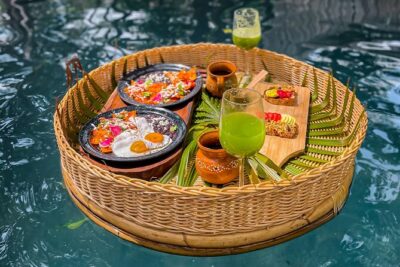 ★ 4.5Floating breakfast in The Yellow Nest (near Dos Ojos cenote)From $88188 reviews
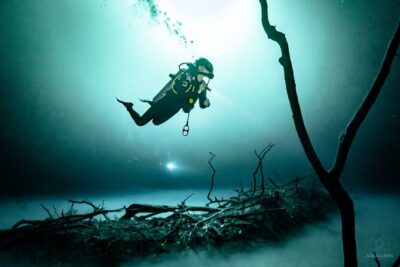 ★ 5.02 cenote divings (including one deep diving) for advanced divers in TulumFrom $215186 reviews
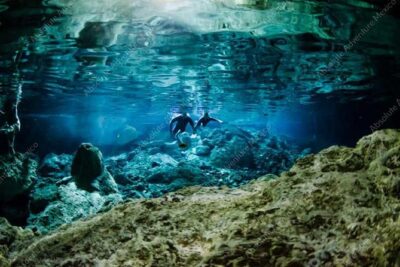 ★ 5.0Dos Ojos Cenote VIP Private Tour – Snorkeling & Mayan LunchFrom $184125 reviews
Browse the lists this tour appears in