
Reviewed · CENOTE DIVING & CAVERN DIVES
Bull Shark Extreme – 1tank /Only for Certified Divers
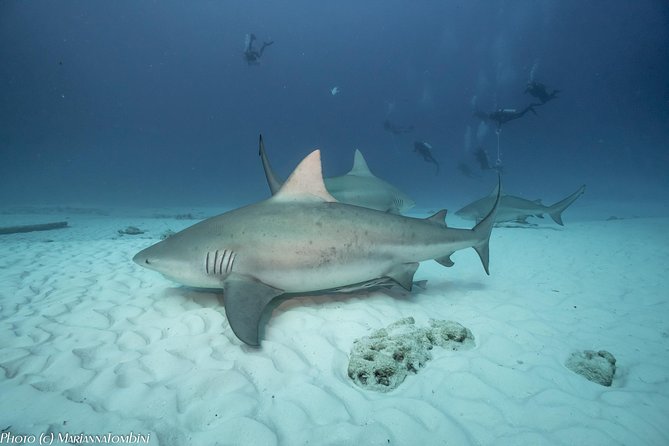
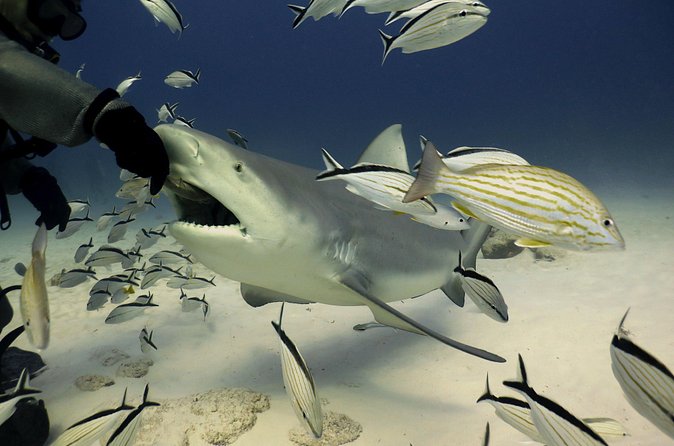
Bull sharks right off Playa del Carmen is the hook. This 2-hour small-group shark encounter is built around a controlled feeder setup, tight safety procedures, and the chance to watch Carcharhinus leucas behave in the wild.
I like that you go with a dedicated scuba guide and a small cap of nine, so you get real attention before you ever drop in.
Two things I especially like: the timing and structure (paperwork, equipment check, then a detailed safety and logistics briefing) and the fact that the sharks are drawn to a feeder at a sandy bottom where the whole group lines up in front. One thing to consider: this is only for certified scuba participants, and there’s extra cost if you need full rental gear plus fees.
In This Review
- Key things to know before you go
- Bull sharks in Playa del Carmen: when you have the best shot
- From 2:30 pm check-in to boat transfer: what your afternoon will feel like
- The 24 m sandy-bottom setup: how the session actually works
- Safety and staff structure: where the operation shines
- Gear, regulators, and the rental decision (including the one caution)
- Price and value: what you pay for the $210 ticket
- SAVING OUR SHARKS: what your trip contributes
- Photo plan and the name to remember
- Who should book Bull Shark Extreme in Playa del Carmen
- Should you book it or pass?
- FAQ
- What does the $210 ticket include?
- How long is the bull shark extreme experience?
- What time does it start and where do I meet?
- Do I need scuba certification?
- Is full rental equipment included?
- What’s the depth and how long is the underwater part?
- How big is the group?
Key things to know before you go
- November to March is the prime window for bull sharks around Playa del Carmen, including pregnant females in the area
- Small group (max 9) helps the guide keep eyes on everyone and makes the whole experience feel calmer
- About 35–40 minutes on site underwater with a controlled profile, around 24 m / 72 ft
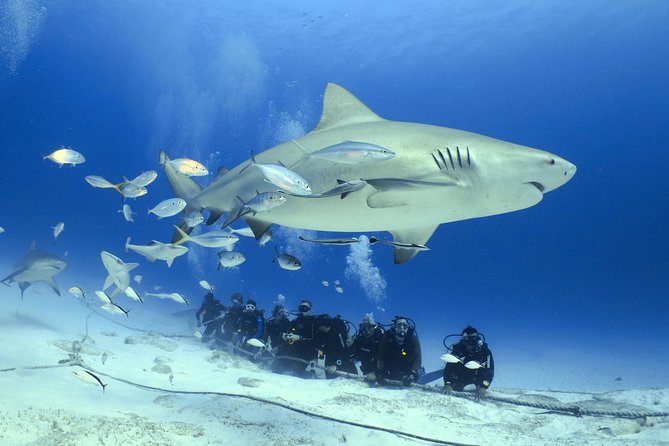
- Feeder setup is the reason sharks show up quickly, usually within minutes
- Conservation project angle (SAVING OUR SHARKS) links your participation to reducing illegal fishing pressure
- You may want your own gear if you’re picky about regulators and computers; one rental-gear concern showed up in feedback
Down into the caverns, other dives near Playa
- Scuba Diving in Cenote Dos Ojos from Playa del Carmen★ 5.0 · 453 reviews
- Scuba Diving in Cenote Kukulkan from Playa del Carmen★ 5.0 · 370 reviews
- Cenote Cavern Tour and Swim with Sea Turtles in Akumal★ 4.5 · 256 reviews
- Discover Scuba Diving & Beach Club with Transportation In Riviera Maya★ 5.0 · 239 reviews
Bull sharks in Playa del Carmen: when you have the best shot
Playa del Carmen is one of the few places in the world where you can consistently do a bull shark underwater session. The big seasonal clue is timing: the best chance is from November to March, when pregnant females appear around the area before heading to secret birthing spots.
That matters because bull sharks aren’t just “there because you booked.” They’re following their own calendar and migration patterns. If your trip falls outside that window, your experience can still be good, but the odds of seeing these specific sharks increase in the Nov–Mar period.
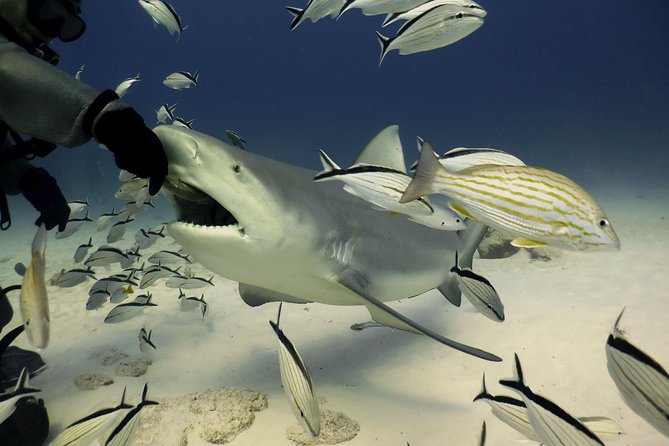
A second useful detail: bull sharks can be shy. That sounds counterintuitive for an animal you’re purposely attracting, but it explains the vibe you’re likely to feel underwater—less chaotic thrashing, more careful, watchful behavior once they decide you’re not a threat.
From 2:30 pm check-in to boat transfer: what your afternoon will feel like
This experience runs in the afternoon, with a meeting time listed as 14:15 / 2:30 pm. Plan for a straightforward flow: you meet at the Scuba Libre location in Centro (Calle 4 Nte, Manzana 3, between 5a avenida and zona federal marítima), complete paperwork, and do an equipment check.
What I like about this kind of lead-in is that it reduces the mental noise. You’re not trying to figure out settings or how your gear works while everyone else is already kitted up. The shop also handles the logistics briefing right before you enter the water, so you know how the staff expects the group to move and where to position yourself.
Once the admin and checks are done, you board just a few steps from the shop and are on the site about five minutes later. That short transfer is practical. Less time on a moving boat can mean less fatigue right when you need to focus on buoyancy and buddy awareness.
The 24 m sandy-bottom setup: how the session actually works
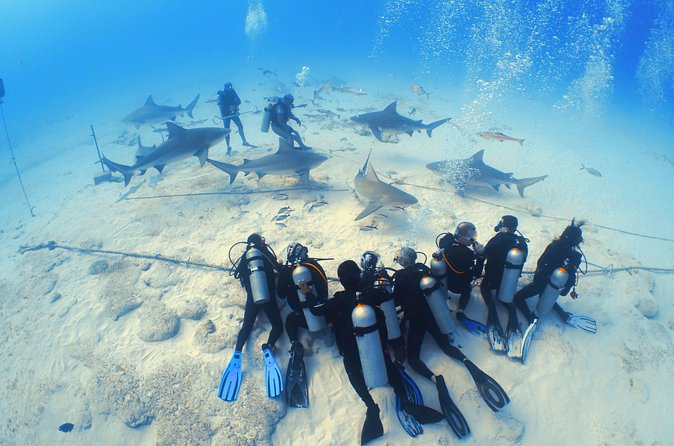
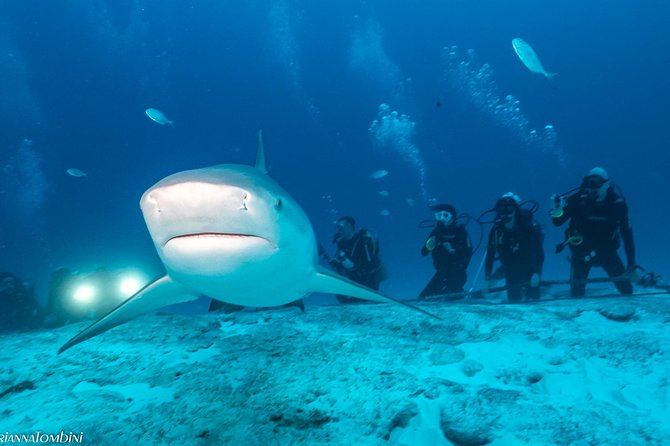
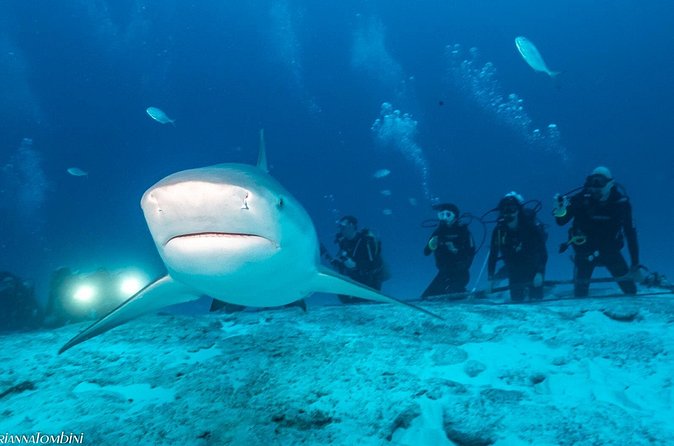
The plan centers on a 24 m / 72 ft sandy bottom. After the group lines up, the staff positions the feeder. The staging is part of why people come back: you’re not scattered across the site hoping for luck. You’ll be in front of the feeder area, with a line available so you can hold on if you want extra comfort and control.
Then comes the waiting period. Once the feeder is in place, it usually takes only a few minutes for sharks to show up. That short time-to-action is a big deal, because it keeps the underwater experience from turning into “stand around and hope.”
You’ll typically follow a controlled profile with a stated 35-minute bottom time. One participant described closer to 40 minutes, so think of it as roughly 35–40 minutes underwater on the site, with the depth around 24 m. Either way, you’re getting enough time to watch the sharks’ movements and feel what it’s like to observe them at close range.
One more detail that’s worth knowing: this is a square-profile style experience, meaning your time and depth goals are managed in a straightforward way. That can be comforting if you prefer clear structure over complex variable profiles.
Safety and staff structure: where the operation shines
Safety is the area where this operation earns its high marks. The recurring praise is about how professional and careful the team feels, plus a thorough pre-session briefing that helps you relax once you’re underwater.
A useful operational detail from the provider’s response: the setup uses multiple support roles, including a feeder, a dedicated safety support, and a photographer who also works as an instructor. There’s also a lead instructor (they referenced a DM coverage style across six participants). Translation: there are enough staff in the water to manage the group and respond if something goes wrong.
That’s exactly what you want for an “extreme” style shark session. Not because sharks are guaranteed danger, but because the whole environment is unusual: deeper depth than casual trips, holding position near a feeder, and trying to stay calm while you’re close to large animals.
Practical tip: listen closely to the briefing about positioning and how the staff expects you to handle your breathing, buoyancy, and pacing. A good briefing doesn’t just reduce risk; it also makes the sharks appear sooner because everything stays controlled.



Gear, regulators, and the rental decision (including the one caution)
Here’s the balanced part. The vast majority of feedback emphasizes professional safety. But one piece of feedback raised serious concerns about rental equipment and how certain safety choices were handled—specifically failures with a regulator at depth, a tank issue on the boat, and questions about computer use and how profiles were managed.
The provider responded with clarifications: they stated the maximum depth is around 24 m / 75 ft for this shark extreme session, described how support staff can share extra air if a participant has an issue while staying with the group, and explained that dive computers are used alongside the lead profile approach when someone has one.
So what should you do with all that?
My practical advice: if you have your own regulator and you’re confident in its performance, bring it. If you rely on rentals, inspect what you receive carefully and don’t ignore small weirdness (hoses, gauges, leaks, breathing resistance). And if you use a computer, bring it and follow it. If you don’t bring one, you’ll be following the staff’s depth/time plan, so treat the briefing as non-negotiable.
Also, because depth is in the 24 m range and time management matters, you should plan to be conservative with your air consumption. The operation expects you to stay within the group rhythm, and that includes not rushing your breathing just because the sharks are nearby.
Price and value: what you pay for the $210 ticket
The listed price is $210 per person for the shark extreme session, about 2 hours total. Included are tanks and weights, plus a guide.
Two extra costs you should budget upfront:
- Full rental equipment (BCD, regulator, wetsuit, fins, mask): $25 per person
- Boarding and marine park fee: $20 per person
That means your all-in expectation depends on your gear. If you bring your own full kit except for tanks/weights, you’ll mainly handle the $20 fees. If you rent full equipment, the trip becomes $210 + $25 + $20 = $255 per person.
Is it good value? For this specific kind of animal encounter, the value comes from three things:
- You’re paying for a controlled feeder setup at the right depth window.
- You’re paying for small-group attention (max nine) and staff oversight.
- You’re paying for a conservation-linked operation (more on that next).
If you’re coming from a resort, also remember the shop is steps from the beach area in Playa del Carmen Centro, so you’re not spending half the day on complicated transfers.
Finally, English is offered, and there’s a mobile ticket option. If you like to keep things simple and avoid paper hassles, that’s a small but real plus.
SAVING OUR SHARKS: what your trip contributes
This experience isn’t just about getting a photo. It’s tied to SAVING OUR SHARKS, a program described as working to protect bull sharks by avoiding fishing.
Here’s why that matters to you: if illegal fishing pressure is part of what reduces shark numbers, any operation that functions as a conservation alternative can help shift incentives. Your participation is part of the funding and attention that keeps the project running and keeps sharks in the ecosystem rather than on the market.
That doesn’t make the ocean a theme park, but it does give the trip a purpose beyond spectacle. And since the sharks are described as shy, the conservation-minded approach also matches what you’re doing: observing rather than forcing the interaction.
Photo plan and the name to remember
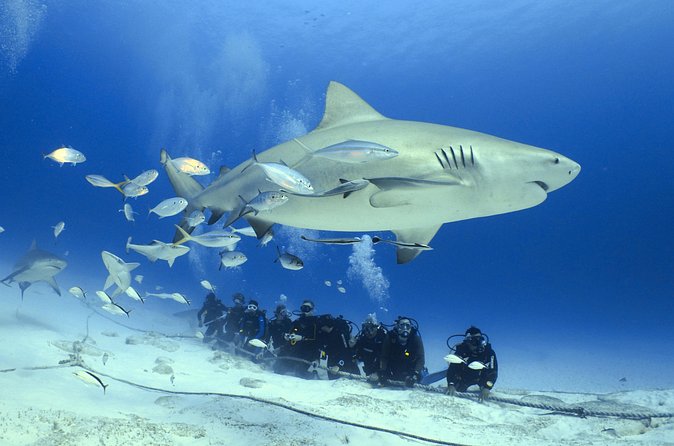
If you want a lasting souvenir, plan to consider the photo package. One participant said it’s well worth buying, and another mentioned a photographer named Travis Xander taking great shots. There’s also mention of a photo credit to Alex from Scuba Libre’s team.
A practical note: close shark encounters are high-stress moments. The benefit of having a staff photographer working underwater is that someone is focused on positioning and timing so you don’t have to spend extra mental energy chasing perfect angles.
Who should book Bull Shark Extreme in Playa del Carmen
This is built for people who already have solid underwater skills and comfort with controlled depth. It’s listed as requiring evidence of valid scuba certification. So if you’re a first-timer, you’ll need to get your training first.
You’ll likely enjoy it most if:
- You’re comfortable around larger marine animals and can stay calm with buoyancy
- You like structured plans and clear briefings
- You want a deeper, time-managed underwater session rather than a vague “we’ll see what happens” outing
Skip it (or at least think twice) if:
- You have shaky comfort with equipment reliability, especially regulators and breathing response
- You hate following a strict group plan
- You’re not confident managing air consumption and depth/time limits
Also, the session requires moderate physical fitness. That doesn’t mean you need to be an athlete, but you should be able to handle getting kitted, stepping onto the boat, and staying steady in the water with the group.
Should you book it or pass?
Book it if you want a high-likelihood bull shark encounter during the best seasonal window, appreciate small groups, and value an operation that focuses on preparation and protection. The combination of a capped group size, a structured feeder setup, and real safety staffing is exactly what makes “extreme” feel controlled rather than chaotic.
Consider booking only with your own gear if you’re equipment-sensitive. While most feedback highlights professionalism, the rental-equipment concern is serious enough that your best move is to reduce variables: bring your regulator and follow your own comfort level with air and timing.
And if your schedule allows it, plan around November–March for the highest odds. That’s the one factor you can’t control once you’re on site.
FAQ
What does the $210 ticket include?
It includes tanks and weights, plus a dive guide (scuba guide) for the session.
How long is the bull shark extreme experience?
It lasts about 2 hours total.
What time does it start and where do I meet?
You meet at 2:30 pm (listed as 14.15). The meeting point is Scuba Libre in Centro, Playa del Carmen, at Calle 4 Nte Manzana 3 between 5a avenida and zona federal marítima.
Do I need scuba certification?
Yes. Evidence of a valid scuba certification is required for all participants.
Is full rental equipment included?
No. Full set dive equipment can be rented for $25 per person (BCD, regulator, wetsuit, fins, mask).
What’s the depth and how long is the underwater part?
The plan is around 24 m / 72 ft with about 35 minutes mentioned for the profile (some descriptions suggest around 40 minutes).
How big is the group?
The tour has a maximum of nine travelers.
More Tour Reviews in Playa del Carmen
- From Playa del Carmen ATV Adventure with Ziplines, Cenote
★ 5.0 · 2,041 reviews - Half-Day Sea Turtle and Cenote Snorkeling Tour from Cancun & Riviera Maya
★ 5.0 · 2,039 reviews - VIP Chichen Itza Private Tour
★ 5.0 · 1,782 reviews - Playa del Carmen Buggy Tour with Cenote Swim and Mayan Village Visit
★ 5.0 · 1,747 reviews - Playa del Carmen Walking Food Tour
★ 5.0 · 1,274 reviews - Jungle Buggy Tour from Playa del Carmen Including Cenote Swim
★ 5.0 · 1,253 reviews
Into the Caverns: More Cenote Dives
- Scuba Diving in Cenote Dos Ojos from Playa del Carmen
★ 5.0 · 453 reviews - Scuba Diving in Cenote Kukulkan from Playa del Carmen
★ 5.0 · 370 reviews - Cenote Cavern Tour and Swim with Sea Turtles in Akumal
★ 4.5 · 256 reviews - Discover Scuba Diving & Beach Club with Transportation In Riviera Maya
★ 5.0 · 239 reviews - Dos Ojos Cenote VIP Private Tour – Snorkeling & Mayan Lunch
★ 5.0 · 125 reviews - PADI Discover Scuba Diving Program in the Riviera Maya
★ 5.0 · 67 reviews
Just Added: Fresh Playa del Carmen Reviews
Cenote Diving & Cavern Dives, compared.
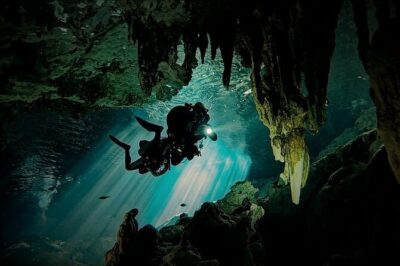 ★ 5.0Scuba Diving in Cenote Dos Ojos from Playa del Carmen453 reviews
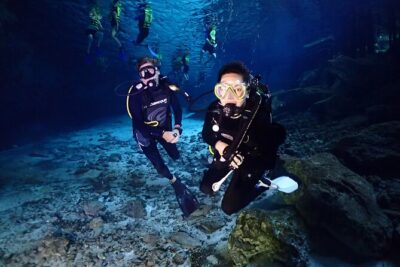 ★ 5.0Scuba Diving in Cenote Kukulkan from Playa del Carmen370 reviews
 ★ 4.5Cenote Cavern Tour and Swim with Sea Turtles in Akumal256 reviews
 ★ 5.0Discover Scuba Diving & Beach Club with Transportation In Riviera MayaFrom $150239 reviews
 ★ 5.02 dives in Cenote Dos ojos Certified DiversFrom $200227 reviews
 ★ 4.5Floating breakfast in The Yellow Nest (near Dos Ojos cenote)From $88188 reviews
 ★ 5.02 cenote divings (including one deep diving) for advanced divers in TulumFrom $215186 reviews
 ★ 5.0Dos Ojos Cenote VIP Private Tour – Snorkeling & Mayan LunchFrom $184125 reviews
Browse the lists this tour appears in