
Reviewed · PLAYA DEL CARMEN
PADI Open Water Diver Course in Playa del Carmen
Ready for a certification in three short days? This PADI Open Water Diver course in Playa del Carmen mixes PADI Touch eLearning (done before you arrive) with pool practice and four open-water boat outings on the Mayan Riviera, where training tops out at 18m/60ft with your buddy.
I like that the format is built for real vacation schedules: you can knock out theory ahead of time and focus your limited days on skill-building and fun.
You’ll also need to be a bit organized—your details have to be sent so they can register you for eLearning, and there’s no “no-effort” version of scuba training.
Two things I especially like: the small group size (max 8) makes it easier to get help when you need it, and the safety culture shows up again and again in the way the instruction is described.
If you’re pairing the course with your trip plans, it helps that the center provides full scuba equipment and drinking water both at the center and on the boat, so you’re not hunting for essentials all day.
One drawback to plan around: food and drinks aren’t included, and hotel pickup/drop-off isn’t listed as included—so you’ll coordinate your timing around the meeting point in the Playacar hotel zone.
In This Review
- Key takeaways before you book
- PADI Open Water in Playa del Carmen: what you’re really buying
- Online theory with PADI Touch before you arrive
- First day logistics: where to meet in Playacar
- Building skills in the pool: the confined water phase
- Four open-water boat outings on the Riviera Maya
- What you’ll see under the water limit (and how to prepare for it)
- Equipment, instructor languages, and the safety culture
- Price and value: is $590 a good deal for certification?
- Who this course fits best (and who should think twice)
- Should you book ScubaCaribe’s PADI Open Water course in Playa del Carmen?
Key takeaways before you book
- Online theory first (PADI Touch): finish knowledge development on your own pace before you land.
- Confined-water practice in a real progression: five pool sessions to build confidence step by step.
- Four open-water boat outings on the Mayan Riviera: training plus proper marine sightseeing time.
- Safety-forward coaching from instructors like Jorge, Dany, Lot, Pierre, Billy, and Muni: calm teaching when nerves show up.
- Full equipment included: you show up ready, not shopping for gear.
- Small groups (max 8): less waiting, more individual attention.
Not sure this is the one? Line it up against a few more Playa favourites first.
- From Playa del Carmen ATV Adventure with Ziplines, Cenote★ 5.0 · 2,041 reviews
- Half-Day Sea Turtle and Cenote Snorkeling Tour from Cancun & Riviera Maya★ 5.0 · 2,039 reviews
- VIP Chichen Itza Private Tour★ 5.0 · 1,782 reviews
- Playa del Carmen Buggy Tour with Cenote Swim and Mayan Village Visit★ 5.0 · 1,747 reviews
PADI Open Water in Playa del Carmen: what you’re really buying
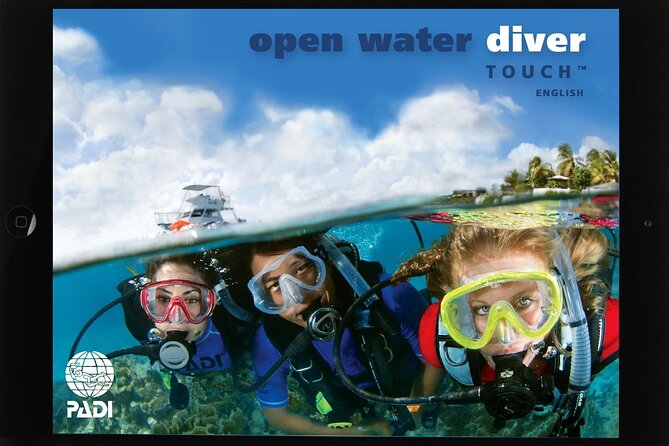
You’re not just buying a card. You’re buying a structured pathway to become a safe, comfortable open-water scuba diver. That’s the value of the PADI Open Water Diver course: it’s designed worldwide, with the same basic phases so you know what’s coming.
Here in Playa del Carmen, the course is set up to compress a lot of work into a practical timeline—three days (about 4 hours each day, approximately) for the overall course experience. The reason that matters is simple: vacation time is expensive. If you can reduce classroom time and keep the “busy work” (the theory) out of your trip days, the whole thing feels less disruptive.
You’ll leave with a certification that lets you explore underwater with your dive buddy up to 18m/60ft. That’s not just a number for the paperwork—it’s the ceiling your training is built around, so your skills are directly tied to what you’re allowed to do afterward.
One more thing I appreciate: this is explicitly designed to reduce pre-arrival friction. If you handle the online steps early, you can make the in-person portion feel like “training days,” not “waste time days.”
Online theory with PADI Touch before you arrive
The biggest time-saver here is the PADI Touch eLearning option. Instead of doing all the knowledge development and exams on vacation, you complete it online at your own pace before arrival.
In practice, that means less classroom time at a place you’re only visiting for a few days. It also means you can finish the theory when it fits your schedule—whether that’s the morning you land or a couple of evenings back in your hotel.
To get registered, you’ll provide required details (full name including middle initials, date of birth, preferred language, email, and your diving fitness status). Once they have that, you get a welcome email with instructions and digital documents.
If you’re the kind of person who likes to feel ahead of schedule, this part is a win. If you’re not, it’s still manageable—just don’t leave it until the last moment.
First day logistics: where to meet in Playacar
The official start point is at Starbucks Playacar (Paseo Xaman-Ha, Lt. 19, Mz. 25, Zona 4, Playa del Carmen). The activity ends back at the meeting point.
Here’s the practical detail that can trip people up: ScubaCaribe is in Playacar’s hotel zone, so the exact meeting point and time in Playacar can vary depending on where your hotel is. When you book, you’re asked to state the full name of your hotel so they can give the correct meeting location and timing.
So think of it like this: you’re not always walking into a “one-size-fits-all” pickup scenario. You coordinate a meeting place that works for Playacar hotels.
Also plan for the real-world rhythm: the center is open Monday 8:00 AM–5:00 PM (as listed for the operating window shown), and you should contact ScubaCaribe at least 1 day prior to confirm details. That small step prevents the most common travel-day confusion.
Building skills in the pool: the confined water phase
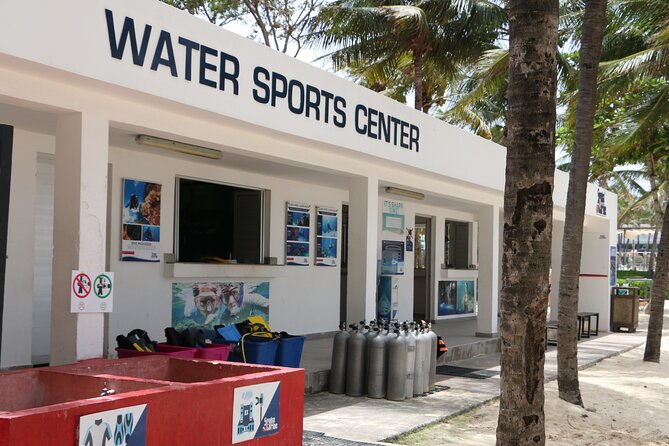
Before open water, you’ll complete five confined water sessions (pool). This phase is where you learn the mechanics that make later underwater outings feel controlled instead of chaotic.
Confined water is also where patient coaching makes a big difference. In the reviews tied to this center, instructors are praised for being calm and clear—people described feeling safe with instructors such as Jorge, Dany, Lot, Pierre, and Billy, especially when nerves or fear show up. One diver specifically described working through panic by remembering what they were taught and applying rational steps to regain control. That’s exactly what pool training is for: turning scary moments into repeatable skills.
What you can reasonably expect from the confined phase:
- learning core scuba skills and procedures you’ll reuse later
- practicing with the full scuba equipment provided
- getting guided feedback before you’re on boats and out at the open-water sites
If you’re worried about learning in a short timeframe, you’ll likely like how structured this course is. The schedule is compact, but it’s not random. The goal is progress from basic control to open-water confidence.


Four open-water boat outings on the Riviera Maya
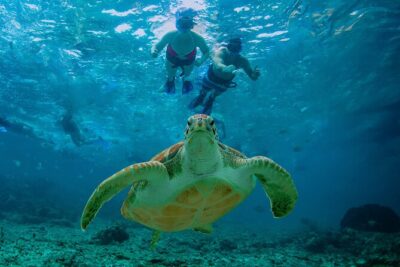
The practical portion culminates in four open-water boat outings along the Riviera Maya. This is the part most people actually came for: the marine life, the open-water feeling, and seeing how your skills work beyond the pool.
A key point: your access is trained to a max of 18m/60ft, and it’s done with your buddy concept in mind. That matters because open water isn’t about “being brave.” It’s about being consistent and safe while you explore.
You’ll be on boats, and conditions can change. One review noted tropical weather effects after a system passed through the day before, but still reported strong sea life and even larger animals on one of the outings. Another note was very practical: if you’re sensitive to motion and seasickness, bring Dramamine. That tip alone could save your trip—no one wants their certification week to turn into a queasy marathon.
Also, because the course is capped at max 8 travelers, you’re less likely to feel like a number. More hands and support make a difference when you’re still getting comfortable with buoyancy, breathing rhythm, and gear behavior.
What you’ll see under the water limit (and how to prepare for it)
Your open-water training is also your first real contact with the local reef environment. The highlights described with this course focus on coral reef life and classic Caribbean species. People talked about:
- seeing sea turtles
- spotting a good variety of fish
- encountering moray eels and even a stingray on earlier sessions with some instructors
- and in at least one case, a bull shark sighting on the broader set of experiences around the area
You should also expect that underwater visibility and animal activity can vary depending on conditions. The course is still worth it even if the ocean decides to be moody, because the goal is skill development—but it’s smart to have realistic expectations.
How to prepare mentally and physically:
- if you get anxious, ask for extra reassurance in the pool phase before open water
- if you get motion sickness, plan ahead with Dramamine
- if you’re coming from flight travel, remember diving within 24 hours of flying isn’t recommended
That last point is a practical safety guideline. It’s not about being cautious for fun—it’s about reducing risk factors that come with flying soon before scuba.
Equipment, instructor languages, and the safety culture
Everything you need is included: full scuba equipment, plus drinking water at both the center and on the boat. That’s a genuine value point because rental gear costs can add up fast in busy vacation destinations.
Instructors are professional and available in English and Spanish, with other languages available on request. If you prefer a specific language, build that into your booking question so expectations match the instructor lineup.
The safety culture is repeatedly emphasized in the way the experiences are described. Students mention feeling safe, staff being helpful, and a focus on learning curves and rules. Multiple instructors were singled out for patient teaching—especially when learning underwater skills can trigger fear. In one example, an instructor known as Lot was praised for being humble and supportive while helping a diver overcome fear and regain self-control. That’s the kind of coaching you want for the first time you’re breathing underwater.
And because the group cap is set low (max 8), it’s easier to get help on the spot—especially when you’re practicing gear checks, buoyancy, and communication habits.
Price and value: is $590 a good deal for certification?
At $590 per person, you’re paying for a full PADI Open Water Diver pathway that includes far more than “a couple of lessons.” Here’s what’s included based on the program details:
- 4 open-water boat outings
- 5 confined-water pool sessions
- PADI Touch eLearning registration and fee (for all languages)
- PADI certification
- a professional PADI instructor (English/Spanish, other languages on request)
- full scuba equipment
- drinking water at the center and on the boat
What’s not included:
- food and drinks
- hotel pickup/drop-off (you’ll coordinate meeting in Playacar)
So is it a good value? For most people, yes—because certification courses add up quickly when you count theory materials, equipment rental, instruction time, and boat logistics. Here, the theory is included via eLearning, and the gear is handled. That reduces the “hidden costs” that often show up when you piece a course together yourself.
The only “value tax” is your own prep. You’ll need to complete the online theory before arriving (or at least be ready to start right away after registration), and you’ll want to plan meals and hydration separately since food isn’t included. If you do that, the price lines up with a smooth, structured certification timeline.
One extra perk for planning peace of mind: the experience requires good weather, and if conditions force a change, you’ll be offered a different date or a full refund (as stated). That’s not something you want to think about daily, but it matters when you’re booking a small vacation window.
Who this course fits best (and who should think twice)
This program is aimed at people who want a fast, legit path to open-water scuba with a safety-first team. It also has clear baseline requirements:
- Minimum age is 10 years
- You should have moderate physical fitness
- You must be fit for diving (medical questionnaire; you may need a doctor’s statement if required)
If you’re bringing kids, the reviews linked to this center mention instructors helping children get confident and following rules with a clear learning approach. The team described making it easier to dive as a family and keeping the instruction structured. That doesn’t mean every child will love it, but it suggests the course isn’t treated like a one-size-fits-all adult program.
If you’re scared of scuba, that’s also a fit—as long as you’re honest about it. The positive experiences described include instructors helping divers overcome fear and panic using what they were taught in the course progression.
Who should think twice:
- if you can’t or won’t complete the online theory in advance, you may feel rushed during your vacation
- if you’re not comfortable coordinating meeting points in Playacar (since pickup/drop-off isn’t included)
- if you have medical considerations that make you unable to complete the fitness review
Should you book ScubaCaribe’s PADI Open Water course in Playa del Carmen?
If you want a certification course that’s organized, safety-focused, and efficient with vacation time, I’d book it. The combination of PADI Touch eLearning plus pool sessions first is the practical recipe: it helps you reach open water with skills you’ve already practiced, not just information you read once.
I’d especially recommend it if you value patient instruction—names like Jorge and Dany come up with people who felt safe and learned a lot, and instructors like Lot were praised for working through fear calmly. And if you want to see local reef life like sea turtles, the Riviera Maya open-water outings are the reason this course is worth your time.
Last nudge: if you’re prone to motion sickness, plan ahead with Dramamine, and don’t forget that food and drinks are on you. Do those two things, and your week becomes about learning and real underwater moments—not logistics.
If you tell me your dates and whether you’re starting the eLearning now or on arrival, I can help you map the timeline so it fits your trip without stress.
More Tour Reviews in Playa del Carmen
- From Playa del Carmen ATV Adventure with Ziplines, Cenote
★ 5.0 · 2,041 reviews - Half-Day Sea Turtle and Cenote Snorkeling Tour from Cancun & Riviera Maya
★ 5.0 · 2,039 reviews - VIP Chichen Itza Private Tour
★ 5.0 · 1,782 reviews - Playa del Carmen Buggy Tour with Cenote Swim and Mayan Village Visit
★ 5.0 · 1,747 reviews - Playa del Carmen Walking Food Tour
★ 5.0 · 1,274 reviews - Jungle Buggy Tour from Playa del Carmen Including Cenote Swim
★ 5.0 · 1,253 reviews